gender-based violence (GBV)
Facts and figures: Ending violence against women
Data on violence against women from the UN
Data on violence against women from the UN

WGEA publishes data and statistics on gender pay gaps, gender composition of the workforce, parental leave, flexible work, employee consultation and employer actions to prevent sexual harassment in the workplace on our Data Explorer.

A look at recent technology-facilitated gender based violence

In a world where we quantify everything from GDP to happiness, can you put a number on gender equality?

In March 2006, the Women’s Health Research Institute was established by BC Women’s Hospital + Health Centre to enhance and galvanize the impact of women’s health research conducted at BC Women’s Hospital and throughout BC.

National Women’s History Museum’s new report reveals the challenges they face, what they need, why representation matters and what we can do about it.
Astrid Linder has spent over 20 years in traffic safety research. In this talk she proves with data from multiple sources that our cars are unnecessarily unsafe for women, simply because all crash test dummies are still based on the average male.
Gender Data 101 equips you with the skills to use data for impactful programs, closing gender gaps and promoting gender equality

Many girls and women cannot exercise their right to education due to gender inequality and discriminatory practices.
The index measures how laws and regulations affect women’s economic opportunity on a scale from 0 to 100, where 100 means equal legal rights for men and women.

Measuring outcomes is essential to ensuring we provide girls with the right support and opportunities they need to thrive.

Data on women’s health in the US.

The data can be used to raise awareness, improve policies, and promote women’s equality. Explore the data here!
The annual Global Gender Gap Index benchmarks the state and evolution of gender parity across four key dimensions.
Resources and data on global gender equality.
The fate of nations is tied
to the status of women. WomanStats makes this linkage visible and demonstrable.
Every second, three girls experience sexual violence. One in five girls will face sexual violence before she turns 18. Experiencing sexual violence in childhood has lasting physical, mental, educational, and economic consequences that carry into womanhood. The effects don’t disappear—they shape a woman’s life.
On this page, we provide an overview of how the gender ratio varies across the world and over time. We present data on how it varies between age groups and the forces that influence the gender ratio.
This page presents several graphics analyzing the data generated from HerAtlas, UNESCO’s interactive tool monitoring girls and women’s right to education worldwide.
“Twenty-five years since the adoption of the Beijing Declaration and Platform for Action, progress towards equal power and equal rights for women remains elusive. No country has achieved gender equality, and the COVID-19 crisis threatens to erode the limited gains that have been made. The Decade of Action to deliver the Sustainable Development Goals and efforts to recover better from the pandemic offer a chance to transform the lives of women and girls, today and tomorrow.” – Secretary-General António Guterres
Explore key findings on gender equality across all SDGs with data and visuals on the most pressing issues affecting women and girls globally.

Ahead of Women’s History Month, here’s a look at some of these trends and data points, based on Pew Research Center surveys and analyses as well as federal data.
This overview focusing on the access to contraception around the world is one of the components of a special report dedicated to gender inequalities in the world in 2025.

The ROX Institute for Research and Training studies girls’ unique experiences and captures the opinions, behaviors & aspirations of thousands of U.S. girls.
A new report by UNICEF, UN Women, and Plan International on progress—and persistent challenges—for adolescent girls worldwide.
UN Women’s strategy for change on gender data is Women Count. This programme has the goal to create a radical shift in how gender statistics are used, created, shared and accessed.

Tracking laws and policies around US related to reproductive rights.
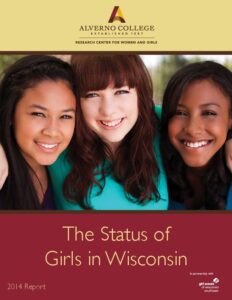
This report provides information, without extensive interpretation, to serve as a catalyst for young women and girls and the agencies that serve them to voice their perspectives on the issues and challenges they face and work to develop the solutions, programming and resources needed to address these issues.

Research and policy organization committed to advancing sexual and reproductive health and rights.

Makes gender statistics accessible through narratives and data visualizations to improve the understanding of gender data.
Reflect the living conditions and situations of people with respect to all policy fields and areas.

Current and historical statistics on a broad range of topics and sub-populations of women in the labor force.
Report outlines the value of big data for monitoring the Sustainable Development Goals (SDGs) in relation to women.

Provides policy makers, political actors and parties, gender equality advocates and election practitioners with an easily accessible resource on gender quotas.

Project is a joint initiative of the United Nations Statistics Division and UN Women that seeks to improve the integration of gender issues into the regular production of official statistics.