Fiji
Situating Women
The first book to write women into Fiji’s postcolonial history, providing a detailed historical account of that country’s gender politics across four tumultuous decades.
The first book to write women into Fiji’s postcolonial history, providing a detailed historical account of that country’s gender politics across four tumultuous decades.
In an age when genteel women wrote little more than personal letters, how did Jane Austen manage to become a novelist?
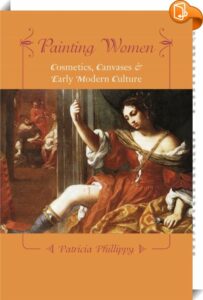
Studies the intersection of painting and femininity in 16th & 17th-century Europe as a site for exploring abstract ideas of gender construction and subjectivity

20 historic female engineers whose groundbreaking work has helped to shape our world, but who are often not given the recognition they deserve

Yoruba Richen explores intersectionality between being a member of the African American and LGBTQIA+ communities.

Provides an online destination to find remarkable women who have contributed to Wisconsin’s state legacy.

A forum for those interested in the history of women, as well as the wider role of gender in science, medicine, and technology.

A collaborative database consisting currently of more than 2,300 letters handwritten or narrated by Florence Nightingale that for the first time are now available to researchers through a single source.

Exhibition explores cross dressing and gender identity during the 18th and 19th centuries.

The ACT UP Oral History Project is a collection of interviews with surviving members of the AIDS Coalition to Unleash Power, New York.

Database provides access to digital collections of primary sources documenting the history of women in the United States.
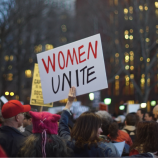
Helps historians discuss research interests, teaching methods, and the state of the field and historiography of women’s studies.
Recognizes historic accomplishments of women by providing informational services and educational and promotional materials.

Oral history, audio, photo, and documentary archives from the golden age of adult film in New York, and beyond.

Website provides an overview of the exhibition Before Victoria.

Celebrates the life and work of the best known figure in nursing history.

National association and charity for the promotion of women’s history.
Images and documents, including books, as nodes in a network of complex connections.

Lessons, biographies, reviews, and other resources related to teaching about women in world history.

This bibliography concentrates on books, chapters in anthologies, and periodical articles on the collective history of American Jewish women and archival resources on individuals and women’s organizations.
Posters showing efforts to educate and inform on AIDS.

Gerber/Hart is an LGBT library, archives and cultural center.
The GLBT Historical Society exhibits materials and knowledge to promote understanding of LGBTQ history, culture and art.

Helps LGBTQ people learn more about their community, straight people learn more about their neighbors and everyone learn more about themselves through the power of storytelling.
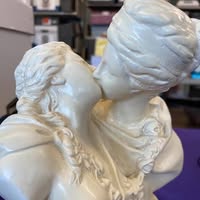
Archive dedicated to preserving and promoting lesbian and feminist history and culture.

Archive serves to preserve the history of our community and its rich heritage.
History hub for gay, lesbian, queer, and trans oral histories.
Eric Marcus’s decades old audio archive of rare interviews — conducted for his award-winning oral history of the LGBTQ civil rights movement — to create intimate, personal portraits.

Repository of Lesbian, Gay, Bisexual, Transgender, Queer (LGBTQ) materials.

Preserves history through collecting, archiving, and making widely available first-hand oral histories of LGBTQ pioneers.

History, arts, and culture relevant to sexually diverse communities in metropolitan Washington DC.

Preserves the history of trans, gender non-binary, and Two-Spirit people.

A digital collection of published works by 19th-century Black women writers.
Millinery, dressmaking, clothing and costume books from the UW-Madison collections.

First stop for Library of Congress researchers working in the field of American women’s history.

Manifestos, speeches, essays, and other materials documenting various aspects of the Women’s Movement in the United States in the 1960s and 1970s.

Portraits published between 1771 and 1859.
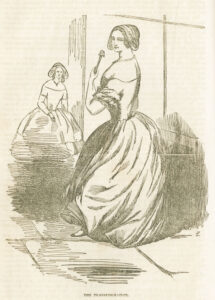
Exhibit of societal responses to women’s deviance and the stories of five women, both villains and victims, who treaded on the margins of morality.

Exhibition featuring Victorian era homemaking handbooks and periodicals written for women at that time.

Photographs of the 1977 National Women’s Conference in Houston, Texas.

Original sources on the fire held at the ILR School’s Kheel Center, an archive of historical material on labor and industrial relations.

The National Susan B. Anthony Museum & House in Rochester, NY.

Mary McLeod Bethune achieved her greatest recognition at the Washington, DC townhouse that is now this National Historic Site.

While restoring knowledge of Gage’s contributions, the Gage Foundation is also an educational resource for human rights issues.

A non-profit organization that furthers the legacy of Alice Paul and her life’s work for gender equality, and takes a leadership role in bringing recognition to women and the historic sites that honor them.

Women Working, 1800–1930 is a digital exploration of women’s impact on the economic life of the United States between 1800 and the Great Depression.

Original documents, pictures, eyewitness accounts and other primary sources available online that reveal the history of Wisconsin women.

On June 10, 1919, the Wisconsin Legislature passed a resolution ratifying the Federal Constitutional amendment abolishing sex as a qualification of voters.

The Global Feminisms Project archives oral history interviews about issues related to women and gender in different national contexts.

Dedicated to preserving the history of LGBTQ people and communities in Newark, New Jersey.

Brings together scholars, musicians, media-makers, performers, artists, and activists to explore the role of women and popular music in the creation of cultural scenes and social justice movements in the Americas and beyond.

Researching and telling the stories of LGBTQ+ individuals and organizations in our region.

The LGBT Religious Archives Network (LGBT-RAN) is a resource center and information clearinghouse for the history of LGBT religious movements.

A Library of Congress exhibit.

A look at women’s contributions to honky tonk and country music and how women overcame both the sexist society and the sexist music industry.
The purpose of the Digital Transgender Archive (DTA) is to increase the accessibility of transgender history by providing an online hub for digitized historical materials, born-digital materials, and information on archival holdings throughout the world.

Documentary with interviews with black lesbian elders from across the United States.

Stories about people in the past who identified as lesbian, gay, bisexual, or transgender; and people who did not conform to dominant norms of sexuality and gender.

A digital history exhibition about women at the University of Michigan.
Promotes scholarship and supports the activities of women in the historical profession.

Over 1,300 images and scanned texts representing objects and printed matter that reflect the lives of women from the mid 1800s through the mid 1900s.

Documents activism and public debates surrounding women’s rights and health in early 20th-century Russia.

Exhibit explores the history of Black women in the American South from the Antebellum era to the Reconstruction era.

Interprets and maps the life and work of Septima Poinsette Clark to provide insights into her experiences.

Curated from the hearts and minds of Black womxn [sic], archives encompass the history of our past, documents the present while imagining the future.

The annotated bibliography of English-language books that collect three or more short biographies of women.

Archive of filmed oral histories of 48 women represented here provide a complex portrait of Rosie the Riveter.

Manifestos, speeches, essays, and other materials documenting various aspects of the Women’s Movement in the United States in the 1960s and 1970s.

History of the 1977 National Women’s Conference, the only federally funded, bipartisan supported, and most diverse gathering of American women in U.S. history.

(BAP) seeks to recapture and redevelop the historic anti-war, anti-imperialist, and pro-peace positions of the radical black movement.